Author Archive

Struggling to Break Into Politics? Start Where Almost Everyone Else Did: A Campaign

January 24, 2026

Struggling to start in politics?
Haven’t worked on a campaign yet?
Don’t know where to find these roles?

Then this article is for you.

Politics, like every other industry, has “break-in roles.” These are the jobs almost everyone starts with before moving up. If you work in accounting, you usually begin at the bottom crunching numbers before you’re sitting in client meetings or managing accounts. If you work in law, you don’t start arguing Supreme Court cases—you start doing research, drafting memos, and learning how the system actually works.

In politics, that break-in role is working on a campaign.

Campaigns Are Where Political Careers Actually Begin

There’s a misconception that political careers start in D.C., on Capitol Hill, or at a consulting firm. For a small number of people, that happens. But for the overwhelming majority of political professionals, campaign managers, communications directors, political directors, data analysts, consultants, it started on a campaign.

Campaigns are where you learn the basics that everything else in politics is built on:

  • How voters actually think
  • How messaging lands in the real world
  • How to manage time, people, and pressure
  • How wins and losses really happen

These things can’t be learned from Twitter, political podcasts, or reading strategy memos. They only come from doing the work.

The Average Voter Is Not Who You Think They Are – Campaigns Teach You That

One of the biggest wake-up calls for people new to politics is realizing how different the average voter is from what they see online.

Social media shows you a very narrow slice of the electorate. Algorithms feed you the loudest voices, the most partisan takes, and the most politically engaged users. If you’re passionate enough about politics to be reading this blog, you’re already in the top fraction of a percent of engagement. 

Most voters are not on political Twitter.
Most voters are not reading insider X threads.
Most voters are not arguing policy online.

In fact, many of the loudest voices online don’t even live in the district they’re talking about.

Campaign work forces you to step outside the algorithm and into reality. You talk to voters who are busy, skeptical, disengaged, or undecided. You learn quickly what messaging resonates, what falls flat, and what people actually care about when they’re making a decision. Don’t even get Dustin started on the “voters take six points of contact to actually vote” rant. 

Why Campaign Experience Matters Before Anything Else

Campaigning is important because it teaches you how to communicate with the real electorate before you move into higher-level roles like communications, strategy, data, or management.

In politics, it becomes apparent in seconds whether someone has actually worked on a campaign and talked to real voters. There’s a night-and-day difference between people who understand politics in theory and those who understand it in practice.

That doesn’t mean it’s impossible to skip campaign work and land a political role elsewhere, but it is rare. And when it happens, the learning curve is steep.

Campaigns build instincts you can’t fake:

  • How to frame an issue in plain language
  • How to read a room or a voter
  • How to adapt messaging on the fly
  • How to operate under deadlines and pressure

Those instincts follow you for the rest of your career.

Why Midterms Are the Best Time to Jump In

Campaign jobs are seasonal by nature. That’s why timing matters.

Midterm cycles are one of the best times to get started because:

  • Campaigns scale quickly this time of year
  • Responsibility comes earlier
  • Good organizers stand out fast
  • There’s constant demand for reliable talent

If you perform well, doors open quickly—to future campaigns, consulting firms, advocacy groups, and political organizations.

Many people who build long-term careers in politics can trace it back to one cycle where they said yes to a campaign role and learned more in a few months than they could have anywhere else.

Where to Find Campaign Jobs

One of the biggest barriers for new talent isn’t interest—it’s access. People don’t know where these jobs are posted, who’s hiring, or how to get started.

That’s exactly why we built Republican Jobs.

We work directly with campaigns and political organizations to surface real, active roles for people at every stage—especially those looking to break in.

If you’re serious about starting a career in politics, take a look at our current campaign listings and apply.

👉 View opportunities:
www.RepublicanJobs.gop/opportunities

👉 Apply here:
www.RepublicanJobs.gop/apply

Your first job in politics probably won’t be glamorous, but it will be foundational and fun. And for most people who make it in this industry, it all starts the same way: on a campaign.

Why Are Entry Level Political Jobs So Hard to Find?

May 27, 2025

With graduation season upon us, we’re seeing an influx of resumes from recent grads hoping to break into politics. It’s one of my favorite times of year because I love seeing new talent raise their hand. But if you’re a new grad eyeing your first job in politics, here’s a reality check—and some advice. Please note this is regarding non-canvassing or field organizer roles on a campaign, which are easy to find, but seasonal. 

The Hidden Challenge of Entry-Level Roles

Most people assume entry-level means “easier to get.” In reality, it’s the opposite.

Because the qualifications are lighter, there’s a much larger talent pool. A senior-level role—like a Political Data Director—might only draw interest from 5 to 10 qualified people nationwide. But that entry-level staff assistant role? You could be up against hundreds, if not thousands.

The competition is fierce. So how do you stand out?

What Gen Z Needs to Know

Some things in politics have changed, but the basics haven’t. If you haven’t yet interned, volunteered on a campaign, joined your campus political group, or plugged into your local county or state party—start now.

Seriously. There’s always something to do. Political parties are under-resourced and constantly recruiting volunteers, especially at the local level. Waiting for the “perfect” paid job to pop up is a mistake. The people getting hired are often the ones who showed up before the job existed.

What Employers (and Headhunters) Look For

As a headhunter, I’ll be honest: a college resume rarely tells us whether you’re actually motivated. But when I see internships, campaign work, club leadership, or volunteer experience? That person moves to the top 10% of my list.

It’s not just about checking boxes—it’s about showing that you care enough to show up.

Your degree and GPA are nice, but they’re not what gets you hired. I’ll take someone from a community college who spent four years organizing and showing hustle over someone from an Ivy League school who never left the classroom.

Final Thoughts

Politics is competitive at every level—but especially at the start. The good news? The path to standing out is clear. Get involved. Show initiative. Build your network. And don’t wait for someone to hand you a job—go earn it by showing up before you’re asked.

Want more real talk?

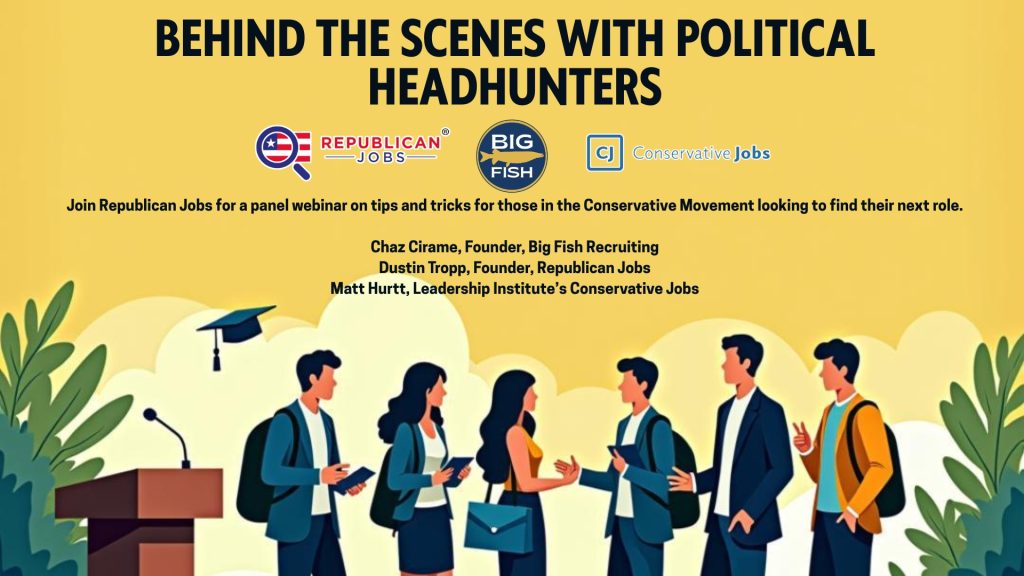
Join us for our June 11th panel:
🎯 Behind the Scenes with Political Headhunters
🕛 12–1 PM EST | Hosted by Republican Jobs

Register here:

https://lnkd.in/gJhwQZXr

Let’s get you in the door.

Gen Z, You Can (and Should) Counter a Job Offer—Here’s Why

May 24, 2025

Gen Z, You Can (and Should) Counter a Job Offer—Here’s Why

Every year around graduation season, we see the same trend: bright, talented Gen Z job applicants landing interviews, getting offers for jobs they actually want… and then walking away from those offers over something small—like $5,000 or a slightly inconvenient start date.

Why?

Because no one told you it’s okay to counter.

So let’s clear the air.

If you get a job offer that’s close to what you want, don’t reject it outright—try to negotiate.

We’ve had multiple Gen Z candidates in the past week alone reject great offers without ever countering. When we followed up, we heard things like:

“I turned it down because the salary was a little lower than I hoped… I didn’t know I could ask for more.”

That’s fixable. In fact, in most of those cases, we got them back to the table just by coaching them through a respectful, reasonable counteroffer.

Let’s Be Honest: Countering Is Expected

My clients might hate me for saying this, but here’s the truth:

Countering a job offer is part of the process. If you’ve made it to the offer stage, the company already wants you. Asking for $5–7K more on a $70–80K offer is normal. Even $10K isn’t outrageous under six figures.

The odds that they pull the offer entirely? Basically 0.01%.

Worst case? They say no.
Best case? They say yes—or meet you halfway.

Either way, you’ve lost nothing by advocating for yourself.

What If You Have Another Offer?

Even better. If Company B is offering more money but you vibe more with Company A’s mission or culture, ask A to match or get closer. That’s called (pardon the millennialsplaining) leverage—and you have it.

The key is timing:

The sooner you counter, the more likely they’ll say yes—before they move on to other candidates or try to wrap the hire.

Pro Tip: Talk to Your Headhunter

If you’re working with a recruiter or headhunter (like us at Republican Jobs), don’t go dark and reject the offer out of nowhere. Call us. Text us. We’re literally here to help you navigate this and avoid leaving money or opportunity on the table.

We know how to make the ask without burning bridges.

One Caveat: Campaign Roles

This advice mostly applies to permanent roles with companies or organizations. Campaign jobs tend to have tighter budgets and shorter timelines—so negotiations might be more limited. That said, even in campaign roles, a polite counter is rarely offensive. The worst that happens? They say no.


TL;DR:

✅ If the offer is close, counter—don’t walk.
✅ You won’t blow up your chances by asking for $5–10K more.
✅ Use your headhunter—they’re on your side.
✅ The sooner you counter, the more leverage you have.
✅ Campaign budgets may be firm, but it’s still okay to ask.

You’ve got this, Gen Z.

A millennial at Republican Jobs who’s rooting for you (and tired of cleaning up your negotiation messes)

“Start Now, Move Later”: Political Career Advice for Gen Z

April 23, 2025

“Start Now, Move Later”: Political Career Advice for Gen Z

A message to all the Gen Z applicants trying to break into politics:

Every year, I give the same piece of advice to recent college graduates: you don’t have to fully move to start a political job—but you do need to be ready to move quickly.

This doesn’t just apply to campaign work. I’m talking about jobs in D.C., consulting firms, non-profits, state legislatures—anywhere political talent is needed.

Here’s what I tell people: put your stuff in a storage unit near your parents’ or friends’ house. Get a one to three-month Airbnb. Be ready to roll. Start the job first, get your bearings, and then make the big move once you know it’s the right fit and the right city.

Let me explain why this works.


How I Got My First Break (and Met a Future President)

When I graduated college, it was in the middle of a presidential primary. A consultant urgently needed someone for grassroots public affairs work in New Hampshire. They were drowning in town halls and needed help now.

Because my stuff was already in storage, I jumped in the car and got there within 24 hours. I beat out people 10 times more qualified—not because I was the best on paper, but because I was the fastest to say yes.

That one move changed my life. I bowled with Rand Paul, got Ted Cruz to jokingly endorse my fraternity, went to 140 presidential candidate town halls, and even met President Trump. None of that would have happened if I had been busy packing up an apartment.


Why Flexibility Still Matters—Even in Full-Time Roles

Later on, I accepted a political recruitment job in Texas—a state I had never even visited.

If I had signed a lease before stepping foot in the city, I would have been making a huge gamble. Instead, I packed what I needed, flew in, and gave myself a few weeks to learn the layout, crush the job, and figure out where I actually wanted to live.

Once I felt confident, I took a long weekend to move into the part of town that made the most sense for me. No pressure. No stress.


Time Is Everything—Especially in Politics

In this industry, the most valuable currency is time. If you’re entry-level, the person who can start tomorrow has a massive edge over someone who’s still apartment hunting.

Don’t be the person who delays a job offer over a moving checklist. Be the person who gets going and figures it out along the way.

Worst case? You take a risk, and it’s not the right fit. Good news: you didn’t sign a year-long lease. You can recalibrate and try again.


Final Advice: Stay Ready, So You Don’t Have to Get Ready

Gen Z—you’ve got this. Be scrappy. Be mobile. Be fast to say yes. That one moment of flexibility could open the door to the career you didn’t even know you could take.

And remember: You don’t need to fully move to start moving forward.

Why Work in a State Capitol Post-Election?

October 31, 2024

Whether you’re looking for permanent policy positions or holding yourself over until the next election, Republican Jobs highly recommends working in a State Capitol! Although not every state keeps staff year-round—some only hire “for session” while others hire year-round—it’s a great opportunity.

Here are 20 reasons why you should consider working in a State Capitol this November or January of 2025!:

  • Faster career progression: It is a lot easier to become a Chief-of-Staff in most states in your 20s and 30s when you’re working in a State Capitol. While D.C. is crowded with 1000’s of people gunning for a handful of jobs, most state capitols are filled with opportunity, especially once you get past your entry-level job and into the network.
  • Increased ability to make a difference: In state capitols, legislative staff have more ability to make an impact. I remember my first session in the Texas Capitol. After bill-filing deadline, a superintendent brought to my attention that 1% of high school seniors could not graduate due to a testing scheduling loophole during the beginning of COVID. We were able to gut a dead bill, work with legislative counsel, re-write it, and get it passed. As a legislative director that was session-only, I was able to make a real impact that affected thousands of Texans. Hundreds of stories like this exist in state capitols!
  • Increased autonomy: Smaller teams allow operatives to lead initiatives and grow their legislative portfolio. Many tasks get a lot more hands-on than just answering constituent emails.
  • Proximity to decision-makers: Regular, face-to-face interactions with legislators and local officials. Most legislators in state capitols know all the Capitol staff on a first-name basis. It’s a great opportunity!
  • Hands-on policy development: State work offers the chance to shape legislation from inception to implementation—experience that few get at the federal level.
  • Work-life balance: Often better than federal roles, allowing for a fulfilling personal life. Especially if you’re in a state that keeps full-time policy staff; when it’s slow, it’s slow. Some legislators don’t even meet all year.
  • Easier path to elected office: Building a public profile at the state level opens doors. Many legislative staff eventually run for office and leverage their Capitol experience.
  • Community visibility: State capitol roles allow for a more visible presence in the local community, helping you to establish a solid reputation and expand your network.
  • Real-time impact: Policies and initiatives can directly affect local communities much faster than at the federal level. You’ll see the effects of your work in real-time.
  • Cost of living: Lower cost of living than D.C., which means you can build a solid financial foundation without breaking the bank.
  • Less bureaucratic: State governments can be more flexible and responsive to ideas. The red tape is often thinner, allowing you to act on good ideas quickly.
  • State-level lobbying experience: Many state capitol offices are immediate door-openers to work for conservative think tanks and other lobbying organizations. Plus, you’ll build connections with influential local lobbyists.
  • Specialized policy knowledge: At the state level, you get to work deeply on state-specific policy issues, which makes you an expert in areas that might go untouched in D.C.
  • Mentorship opportunities: Many state officials take an active interest in developing young staffers, and they’ll give you firsthand insight into navigating a career in politics.
  • Greater role diversity: You’ll handle a wide range of issues—anything from health to transportation—which is experience you’ll rarely get in a more siloed D.C. role.
  • Experience with state budgets: Working on state budgets is an invaluable skill, and you’ll learn the budgeting ropes quickly in a state capitol role.
  • More frequent elections: State elections cycle faster, meaning you’ll get more campaign experience and have more frequent opportunities to network with the party.
  • Chance to move up within the state: State roles give you a quick path to senior positions, whether in the government, private sector, or even a statewide campaign.
  • Flexibility for future D.C. moves: Legislative experience at the state level is highly valued in D.C., so you’ll be on solid ground if you ever decide to move to the federal level.
  • Path to conservative influence: Many conservative movements originate in state capitols, and working at this level gives you the chance to be at the frontlines of policy changes and build relationships within the network.

If you’re interested in applying for these positions, please visit www.CareerFair.gop or click here to register for the December 5th legislative career fair. As of this writing, 17 states are represented with nearly 100 openings, including caucuses hiring for multiple offices. Of course, you can always send your resume into Republican Jobs to see if we have any other openings!


Tips for Applying and Attending a Virtual Career Fair

October 19, 2024

Apply Here For the December 5th Career Fair

How to Make the Most of Attending a Virtual Career Fair / Tips for Applying

Virtual career fairs are an incredible opportunity to connect with potential employers, make a strong impression, and take a significant step forward in your career. Whether you’re looking for a role in legislative work, non-profits, or beyond, it’s essential to approach the event with preparation and professionalism. Here are some tips to help you maximize your experience and make the right impression at a virtual career fair.

1. Perfect Your Resume / Application

Your resume is the first thing employers will see, and it needs to be spotless. Make sure there are no typos, and ensure it’s clean and professional in appearance. Remember, hundreds of employers may view your resume, as well as every response you provide in the application forms (IT IS NOT PRIVATE). If your resume or application is filled with errors, it could prevent you from even getting into the fair—especially since many of these roles involve significant writing duties. There are limited spots, and if applicants can’t take the time to have a coherent application,  Capitol Jobs Network will not take the time to refer an applicant into their fair on their reputation. 

Avoid treating non-profit and legislative roles like campaign jobs; it’s important to demonstrate that you can communicate effectively in writing. Show employers you have the skills they need by presenting a polished and well-crafted resume.

2. Network and Plan to Attend the Entire Day

The virtual career fair is a unique chance to meet with employers and expand your professional network. To make the most of it, plan to attend the entire day. Not only will you have the opportunity to do some on-the-spot interviews, but many employers may also direct you to their application portals for follow-up steps.

Take the time to message employers directly, connect with fellow attendees, and plan your schedule around sessions or virtual booths that are of interest. The more engaged you are, the more opportunities you’ll create for yourself.

3. Avoid Political Arguments

While everyone attending the career fair is likely to share similar values, it’s crucial to remember that this is still a professional event. The career fair is about securing job opportunities, not engaging in political debates or arguments. Stay focused on your career goals, keep conversations relevant to the job search, and maintain professionalism at all times. This is not the time to have a “who is the most conservative” contest.

4. Don’t Spam the Main Chat

The main chat is visible to everyone, and it’s important to keep your behavior appropriate. Spamming, inappropriate comments, or unprofessional behavior will not be tolerated, and you could be removed from the event with no warning. Use the chat wisely—ask relevant questions, provide thoughtful input, and make a good impression on potential employers.

Campaigns & Elections Op-Ed: With the Election Almost Here, Is It a Good Time to Hire Talent?

September 24, 2024

Click Below to Go to Campaigns & Elections

Read more at Campaigns & Elections

With the Election Almost Here, Is It a Good Time to Hire Talent? (External Link at Campaigns & Elections)

12 Reasons Why Anonymous Job Postings/Confidential Searches Benefit Both Political Employers & Applicants

September 1, 2024

Every day, we receive questions from applicants wondering why Republican Jobs places such a strong emphasis on discrete and confidential job postings. With almost 2,500 successful placements in just two years, we’ve seen firsthand how this approach benefits both our employers and applicants.

Our commitment to confidentiality provides critical protection for our candidates, offering several key advantages.

How Confidential Postings Help Applicants:

  1. Access to Exclusive Opportunities Not Posted Elsewhere: Discrete postings often involve exclusive job opportunities that are not publicly advertised. Candidates have access to a hidden job market where the roles may offer better alignment with their career goals, higher compensation, or more strategic positions within reputable organizations. This gives applicants a competitive edge over those only applying through public channels.
  2. Discretion and Sensitivity for Candidates: In the tightly-knit political industry, maintaining confidentiality is crucial for professionals exploring new opportunities while still employed. At Republican Jobs, we are committed to safeguarding the privacy of our candidates. We understand that many political operatives are actively seeking their next career move while balancing their current roles and professional reputations. Unlike public job boards where resumes might accidentally end up in the wrong hands or even be seen by current employers, our discrete approach ensures that candidates’ searches remain private. Approximately 70% of our headhunting and non-seasonal campaign placements come from individuals who are currently employed and confidentially looking for their next step. While we do not actively “poach” talent, we work closely with candidates who have proactively reached out to us, signaling their readiness for a new opportunity. This approach provides a secure environment for candidates to explore new roles without risking their current positions.
  3. Reduced Risk of Professional Fallout: Confidential job postings help applicants avoid the professional risks associated with openly searching for a new job. In the political world, where networks are small and interconnected, being seen as “on the market” can lead to unintended consequences, such as strained relationships with current employers or colleagues. Discrete postings protect candidates from these risks, allowing them to explore opportunities without jeopardizing their current standing.
  4. Increased Transparency in Feedback: Does discretion lead to more transparency? Absolutely! Because the employer’s identity remains confidential, and in some cases, we can provide more candid feedback to candidates on why they were not selected. This openness helps candidates understand their application’s strengths and areas for improvement without the risk of the feedback being traced back to the employer.
  5. Customized Career Guidance and Support: With confidential postings, recruiters can offer more personalized guidance and support throughout the application process. Since candidates are not publicly vying for the same roles, recruiters can focus on understanding individual strengths, career paths, and preferences, providing tailored advice and strategies to enhance the candidate’s profile and chances of securing the role.
  6. More Honest Conversations with Recruiters: When job postings are confidential, candidates can have more open and honest discussions with recruiters about their current roles, career aspirations, and concerns. This transparency helps recruiters better understand what candidates are truly looking for, leading to more tailored job matches and a smoother hiring process.

How Confidential Postings Help Employers:

  1. Access to Hidden Talent: Many talented individuals in the political arena are privately seeking new opportunities but avoid public job boards due to concerns about their current employers discovering their search. Discrete postings allow these candidates to confidentially explore roles that align with their skills and interests. At Republican Jobs, we specialize in connecting these high-quality candidates to opportunities without compromising their privacy.
  2. Genuine Interest and Fit: By keeping job details confidential, we attract applicants who are genuinely interested in the role itself, not just the organization’s name or prestige. This approach helps filter out those who apply indiscriminately to any political job listing and ensures that candidates have a real passion for the position. We consistently find that this results in a better match between the employer’s needs and the candidate’s qualifications.
  3. Protecting Strategic Interests: Publicly posting specific roles can inadvertently reveal an organization’s strategic plans or upcoming initiatives. By keeping job postings anonymous, we help protect our clients’ strategic interests and maintain confidentiality around their hiring intentions.
  4. Shielding Clients in a Sensitive Environment: In the politically charged environment, public job listings can draw unwanted attention from competitors, hostile actors, or individuals acting in bad faith. By keeping postings private, we protect our clients from potential harassment, and unwarranted solicitations. This helps keep the recruitment process focused on finding the best talent without unnecessary external pressures.
  5. Minimizing Inappropriate Applications: Our discrete posting strategy also helps protect clients from a flood of inappropriate or irrelevant applications, including those from individuals who may become aggressive or hostile upon rejection. Many applicants may not meet the qualifications but apply out of passion or personal interest, often leading to confrontational responses if not selected. By maintaining anonymity, we reduce the likelihood of these situations, ensuring a smoother hiring process for our clients.
  6. Maintaining Control Over the Hiring Narrative: For employers, discrete job postings allow them to control the narrative around their hiring needs. In politics, where public perception and media scrutiny are constant, keeping job postings confidential helps organizations manage how and when information about their staffing changes or expansions becomes public – especially in this industry where standard and routine hiring can be seen as a political news story. This controlled approach prevents speculation or rumors that could arise from public knowledge of a new hire or vacancy, allowing the employer to maintain a stable and focused public image.


Navigating the Competitive Political Job Market with Republican Jobs

July 28, 2024

At Republican Jobs, we pride ourselves on helping qualified candidates find rewarding careers in the political sphere. Our mission is to assist individuals in breaking into the industry and advancing their careers. To date, we have received tens of thousands of applications, interviewed nearly 15,000 candidates, and are close to achieving 2,500 successful placements.

In a recent video, Anna Papalia—whom we highly recommend following for her insightful content on non-political hiring markets (we are in no way affiliated and she does not work in political staffing)—highlighted some key challenges faced by job seekers. While her focus is not political and she is not affiliated with our company, the dynamics she described are relevant to our sector as well.

The Political Job Market: A Unique Landscape

The political job market presents its own set of challenges, marked by both a talent shortage and an influx of applicants. This creates a competitive environment, where even highly qualified candidates can find it difficult to secure positions. The situation becomes even more pronounced when it comes to remote roles, as these positions attract a larger pool of applicants.

For example, in a typical job posting we see, if 25 qualified candidates apply for one opening, the success rate is 4% (keep in mind, there are usually more that can apply who don’t meet the requirements). For remote positions, which often draw even more interest, the success rate can drop to 1% or less. As more people apply during peak seasons, these numbers can shrink further.

However, this doesn’t mean that opportunities are unattainable. At Republican Jobs, we are dedicated to enhancing the chances of our candidates by expanding our network of hiring entities and advocating for exceptional talent, all while adhering to our clients’ strict guidelines. Our placement rate stands at 17%, far exceeding the average in other industries, thanks to our focused approach and commitment to finding the right fit for both candidates and employers.

Tips for Breaking Into the Industry

For those new to politics, gaining experience through campaign work remains the most effective entry point. Especially during a major election year, campaign roles are more readily available and provide invaluable experience that can open doors to non-profit, legislative, and government positions in the future.

The best way to enter the political field is through a campaign deployment. Typically, top-level races hire for multiple positions and are more likely to accept those without prior experience. While this does not guarantee a 100% success rate, our success rate can usually range from 25-40% as we get closer to November.

In summary, while the political job market is competitive, Republican Jobs is here to help you navigate it. We are continuously working to create more opportunities for our candidates and connect them with the right employers. For those willing to put in the effort, campaign work offers a significant opportunity to gain a foothold in this dynamic industry.

Tips for Working with a Recruiter from a Republican Jobs Perspective (Part 2)

May 19, 2024
Tips for Working with a Recruiter from a Republican Jobs Perspective (Part 2)

Tips for Working with a Recruiter from a Republican Jobs Perspective (Part 2)


Read Part 1 here.


  • Help Us Help You – Don’t Make It Harder for a Recruiter to Refer You

Many times, I’ve seen someone fail to find success because it took them a week to get back to us, and the role was filled by then. If a recruiter has to hunt you down, they’re likely to move on. The same way you shouldn’t ‘put all your eggs in one basket’ in a job search, recruiters can’t put ‘all their eggs’ on one applicant. If someone doesn’t respond quickly to a recruiter, might they also ghost an employer or be slow to respond? A recruiter refers applicants based on the recruiter’s reputation, and someone who might embarrass them or annoy a client won’t be referred. 

A recruiter helps refer you, an applicant, to a role based on our reputation. Don’t embarrass us. If an applicant is acting unprofessional, we generally have to remove them from consideration, the same way an employer would if they were handling the first part of the search directly. 

Make sure to provide us with updated resumes, salary requirements, and timely answers to any questions we may need from you. Sometimes we need additional information clarified on behalf of a client—don’t make us wait, as other talent will respond more quickly. In political recruitment, sometimes someone less qualified will get the role simply because they can start faster. Time is the most valuable resource in this industry. Be responsive, if you can’t get to something sent in immediately, at least acknowledge receipt and give a timeline so the recruiter can help stall a search until they can get your information updated. 

Also, ensure your resume is ATS (Applicant Tracking System) compliant. Learn more here. I can’t tell you how many applicants I’ve had to give up on because they gave negative responses when offered advice on what was needed on their resume. “I don’t understand why this resume doesn’t work.” If you’re making it harder for a recruiter to help you, or if they have to spend too much time overexplaining with an applicant about what’s wrong with their resume, there are likely other red flags, and they’re going to move on. Generally, we see this issue more with overqualified talent.

tt (should) go without saying, no recruiter is under any obligation to work with aggressive or unprofessional talent, and they will not do so. How an applicant acts with a recruiter, is a sign of how they will act with their clients. Luckily at Republican Jobs, most of our applicants are awesome and excited, but as they say, ‘there’s always one’.


  • What Do I Do If a Recruiter Does (or Doesn’t) Find Me Work?

If a recruiter finds you a successful placement, make sure to thank them and pay it forward! Recruiters build their businesses on referrals, so if you appreciate working with a recruiter, be sure to tell other great talent and companies about them! Republican Jobs is fortunate to receive daily referrals from references, and we always appreciate it!

What if you don’t get work? First and foremost, don’t burn bridges—especially in politics. Having personally interviewed tens of thousands and placed thousands throughout my recruitment career in politics, I can tell you that talent comes back around. One of my favorite success stories involves one of my first placements: a guy who was a touring drummer. I got him onto a campaign, and he did amazing work. Six years later, after founding Republican Jobs, I was able to place him as a VP of Digital at a national Republican consulting firm. On the same day I write this, a canvasser I interviewed five years ago, whom I initially didn’t place, has just been secured in a top statewide campaign position in his home state through Republican Jobs. 

Remember, don’t take it personally. We want to help everyone we can, but we don’t create the jobs (although we do help open opportunities through networking!). However, no one is in a position to guarantee employment. We’ve interviewed 13,000 live applicants and have only had the pleasure of placing 2,300. While that may not sound like a lot, most recruiters rarely break 5%. 

  • When a Recruiter May Not Be Able to Help You

Remember, we can only help with the jobs we currently have at the current moment. Sometimes, it’s a matter of timing. I can’t tell you how many people I wish I could have placed, but they found work a week before the perfect role opened—sometimes even on the same day a job became available!

Our talent is excited for openings,, but an opening isn’t always available when at the time of application or an applicant’s unemployment window. Jobs are often about timing.

We recommend applying to Republican Jobs even if you don’t see an opening, because we’ll be able to alert you quickly and refer you the same day when there is a job opening that is a good fit. If you’re waiting for the perfect fit, you’re not only missing out on private searches that we can’t advertise, but you might also miss them given how quickly they open and close. We can’t alert you if we don’t know who you are! 

The other reality is sometimes we or the client simply have someone more qualified. We have to give every qualified applicant the best objective referral we can, but understand that there are other talent in the pool we are also working with, and our clients are also receiving referrals from other sources (although they prioritize our referrals, obviously!).

Also, if you have unrealistic salary expectations or aren’t open to constructive criticism, we won’t be able to help. If you have one year of experience and are demanding $150,000 for a senior hill position (yes, we see this weekly), you may be unemployed for quite a while. While we appreciate the ambition, it’s best to leave the ego at home.

And one thing to remember… the best resume won’t get placed with an unprofessional attitude. 

  • Working With a Recruiter on the Process for Best Success

Our best talent ensures they provide us with updated resumes, keeps us informed about how their interviews went, and communicate with our team respectfully. If it’s been a week and you haven’t received an update, that’s a good time to reach out. If you’re blowing us up daily, it’s often seen as aggressive. We wouldn’t want you doing the same to our clients. 

The best applicants I’m working with point out a role they saw on the website, and they’ll send me three to four reasons why they’re a good fit. They’ve clearly read the description and know how and why they’re qualified. This makes our ability to refer them easier on the off chance we do miss a good match. Good applicants know how to provide us with brief, but direct details about their work experience. 

And of course, never under any circumstance, circumvent a recruiter. We’re your partner in the job process, and it’s a two-way street.


Sign up to receive our weekly Republican Jobs newsletter!

"*" indicates required fields