
Archive for January, 2024

14 Common Political Resume Mistakes and How To Fix Them

January 30, 2024


Republican Jobs recommends ‘My Perfect Resume’ to quickly create, change or fix a resume to solve most of these issues. Learn more at our affiliate link here. 

Republican Jobs was started to help as many political operatives on the right as possible, regardless of which side of the Republican Party they’re on. I’ve personally reviewed more than 25,000 resumes in my political recruitment career, and probably even more than that. I’ve had the pleasure of placing thousands of operatives into various careers and campaigns. However, the resume mistakes I’ve seen have always remained consistent, so I felt it was time to get it in writing to help our applicants! 

Here are the 14 most common mistakes I’ve encountered, why they matter, and how to fix them. While none of these are major and are not hard to correct, these small improvements will make every recruiter, headhunter, and hiring manager thank you, leading to better job success. I hope that these tips will assist applicants in enabling us to better support them in their endeavors, or ‘help us help you’!


Part 1: The Basics (For Any Industry)


  1. Understand What a Resume Is Supposed To Do: The average employer views a resume for 5-7 seconds. That is how long you have to make sure they have an interest in interviewing you further or not. It is a one-page snapshot. While submitting two pages is fine for some circumstances, some employers don’t even view the second page or rip it off in some extreme cases. Make it clear, concise, and readable. It should be clear and visible. 


  1. You Don’t Need a Thousand Bullet Points: Especially in politics, you’re going to have a thousand different things you did on a job. If your title is accurate, we will have a basic understanding. Leave it short and sweet. There is nothing worse than a resume with a thousand bullet points under each job title, making them unreadable. Highlight the most important RELEVANT experience to the job you are applying for first, or at the very least, the most important things you did in the role in general. Most recruiters do not have the capacity with the amount we read each day to go past bullet point 2. You’re more likely to get passed over. 


  1. Newest Experience First: I see this a lot with talent in the 3-6 year range. They list their oldest experience first. There have been times where I thought their oldest job was their newest job and incorrectly thought the applicant was entry-level. Again, we see thousands of resumes, always list your newest experience first.


  1. Make Your Resume a .PDF: In the age of mobile phones, many hiring managers may view your application on their phone. If it is in a .doc or .docx, it may not open or be hard to read. Any program they use can make it a PDF. A few additional tips: Don’t just scan in your resume as a .PDF, this should be a text scannable .PDF as many firms use ATS/CRMs to track your application (more on this later). You never know if someone could falsely alter your resume, sending a resume protects you!


  1. You Don’t Need an Executive Summary: This isn’t the 80’s where there were physical resumes being mailed in, etc., and it was unclear where it came from. You don’t need an executive summary. Save the space to highlight your other skills. You only have one page!


  1. Make Sure Your Resume Is ATS/CRM Compliant: Especially when you’re working with placement firms such as Republican Jobs, Big Fish, or job boards such as GOP Jobs and Conservative Jobs, they manage applicants via ATS/CRM systems. Recruiters may have thousands of applicants we work with or are searching through, if your resume is not ATS/CRM compliant, we may miss some of your skill sets or miss key words on your resume in a search, meaning you’re missing out on jobs! If your resume is formatted and standardized correctly, if you’re unsure, you can upload your resume to websites like myperfectresume.com. All their formats are ATS/CRM compliant. I still have applicants that aren’t, and if I have to ask you to fix it, I’ve probably moved on to other people I can more immediately help. Don’t make a recruiter’s job harder, we only have a limited amount of time in a day to help as many people as possible. If it takes two-three days to hear back, we may have already been focused on another search or found someone else to refer to a client – unfortunately in politics, roles move fast. This brings us to our next point:


  1. Don’t Reinvent the Wheel: I see amazing creative talent trying to reinvent or redesign their resume to look eye-catching. The reality is these resumes are rarely ATS/CRM compliant and hard to keep on file. Have a basic resume, your education and contact information at the top, your jobs in the middle, and your skills at the bottom or on the side.


  1. Avoid Sending an “Indeed” Resume: Indeed has their own version of their resume many applicants use. These are seen as low-quality to many employers. Indeed’s one-click apply means anyone can apply, including extremely underqualified or unqualified applicants. Many recruiters use Indeed as a last resort in their recruitment process due to high spam rates, and seeing an Indeed style resume may associate you with that pool. (That’s not to say applying on Indeed with a GOOD resume won’t HELP you stand out of the crowd, as it certainly will!).


Part 2: Making the Perfect Political Resume


Here are some of the mistakes I see with industry-specific issues:


  1. Not Including Political Experience in The First Place: Some may laugh reading this… but yes, we see this all the time. In someone’s first few years in politics, their campaign work may be seasonal. However, and for some reason when I mention this to applicants they act like I blew their mind, you can have a POLITICAL resume and a NON-POLITICAL resume. Send your political resume to political employers, and a non-political to non-political employers. You’re SUPPOSED to have multiple versions of your resumes tailored to a job. If we have to guess, we’re going to assume you don’t have any. 


  1. Not Listing Your Last Campaign: I still have applicants in 2024 who haven’t updated their campaigns since 2022 or sometimes even 2020. I’m not supposed to guess which campaign they worked on. If you moved up from an organizer since then, and all I have is your organizer experience, why would you be on the short list for a campaign manager, for example.


  1. Not Listing the Campaign or Firm Under the Job: We see this a lot with canvassers or entry-level talent. They’ve worked on 5-6 campaign deployments and can’t list the campaign or remember the name. The worst thing a seasoned campaign veteran can tell a recruiter is ‘I can’t remember who I worked for’, and it still happens weekly (there’s always one!). First off, it shows me you weren’t passionate enough about the campaign, two if you can’t list it because you’re under NDA (NDAs are only until the job ends) at least list which consulting firm you were working under. List it, again if you’re applying for roles outside of the industry make sure you have a POLITICAL resume with detail on it.


  1. Inflating Campaign Titles, We Always Know: When an entry-level applicant tells me they were a ‘campaign strategist’ when they were a canvasser, it’s ALWAYS obvious. I’m not sure what’s more offensive, the fact that an applicant did this, or the fact they think we’re that stupid. The worst offense I ever had was in 2017 when an applicant said he was the ‘Assistant to the Legislative Assistant’. This glorified intern lasted three days on a campaign due to ego. He was lucky he was hired against my better judgment. There are office jokes to be made here. Don’t falsify titles, I know politics and campaigns can have ambiguous titles, but don’t overinflate them. We know, and we usually know who you worked for enough to find out on the off chance we were to fall for something that ridiculous.


  1. Not Listing All Your Volunteer Experience and Political Involvement: I have passed on many applicants to later find that they in fact had volunteer experience they didn’t list. Political volunteer experience is absolutely experience. If I had two digital directors, and one had three years of digital ad experience plus political volunteer experience, and the other had four years of digital experience, I’m going with the three-year applicant. At least they probably spoke to a voter to know that messaging is a little more nuanced and that the average voter isn’t found in a social media echo chamber. But I digress that topic for a future blog.


  1. Putting Your Face on Your Resume: College students, I don’t know who told you in the career counseling department that this was a good idea, but it comes off tacky.


Final Points:

The most important part of this is that we take you as seriously as you take your resume. If you aren’t serious about your resume and application, why should we be serious about your performance? While we don’t expect with the hundreds of applications an applicant may submit to make a tailored resume to every job, we do expect one that is industry-specific, and to put some effort. If you can’t take your resume seriously, would you take our client’s job seriously?


Republican Jobs loves helping applicants proof their resumes and providing feedback. We hope this helps applicants find success and happy hunting!

Of course, if you’re on the market you can apply at www.RepublicanJobs.gop/apply and find current openings at www.RepublicanJobs.gop/opportunities.

 

Remote/Hybrid Work & the Political Job Market: What to Do (and Not To Do) in a Remote Job Search

January 21, 2024

Remote/Hybrid Work & the Political Job Market: What to Do (and Not to Do) in a Remote Job Search


Remote/Hybrid Work and the Political Job Market: What to Do (and What Not to Do) in a Remote Job Search

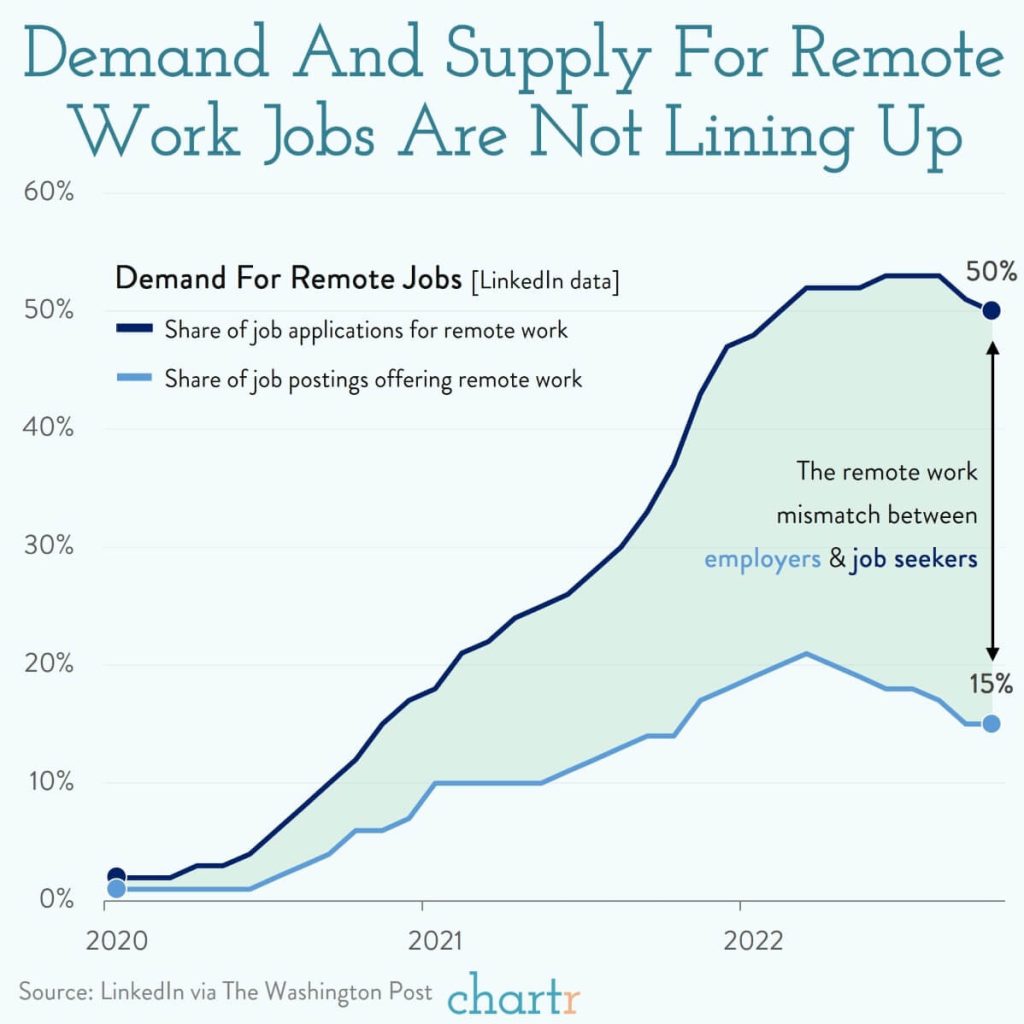
Every day at Republican Jobs, I witness the high demand for remote work, with dozens of resumes flooding our inbox, all competing for these positions. Some remote roles are in such high demand that we have to remove them from our website due to being inundated with hundreds of applicants, though not always for the right reasons. The surge in applications for our remote openings is so overwhelming that I can’t guarantee our clients will review each one, even after we’ve weeded out unqualified candidates. It’s troubling to see applicants limiting themselves solely to remote roles, as (and why would they) not always realize that these opportunities are open to any qualified candidate nationwide, which significantly decreases their chances of success. These applicants sometimes become frustrated after applying to 4-5 remote roles without success, and worse, they often shoot the messenger. Having interviewed so many political job seekers who are desperately seeking employment and strongly prefer remote options, I find myself continually addressing the question: Is remote work truly viable in our industry, and if so, why is it so difficult to secure such positions? And, is there a way to increase your chances of being placed in these roles given how competitive they are?

We hope this overview will help our remote job seekers become more competitive and successful in their search, and understand what Republican Jobs sees on the other side of the job search.

National Remote Job Trends

Currently, the national hiring market is experiencing a significant demand for remote work, even as companies transition back to in-person operations. As conservatives well-versed in supply and demand, we understand that we’re facing a situation with high demand but limited supply. As headhunters, we can connect applicants to available roles, but we cannot create roles that don’t exist. We heard from dozens of clients in the 2022 political cycle that firms that brought on remote workers were burned. Even if there are plenty of solid remote workers (and we know there are many!), many employers felt burned out by the end of the cycle. This doesn’t mean that there aren’t ANY remote roles – but the reality is that they are decreasing in supply as demand from workers rises.

As a recruiter/headhunter, unfortunately, we don’t create jobs, although we do advise clients on considering remote options – which we always support and encourage given our strong national talent pool. Which brings us to our next point:


What is Republican Jobs Seeing on the Political Job Market?

In the political job market, the challenges are distinct due to the fixed locations of legislative offices, state capitols, and campaign districts. For example, in political communications, being immediately present is often critical. Picture a communication crisis erupting just before an email blast; employers need quick, direct access to their team, not the delayed responses that remote working might entail. Similarly, campaign managers need to be physically present in their district to manage campaigns effectively.

At Republican Jobs, I frequently face the difficult task of removing the limited number of remote roles listed on our website each month. On a bad day, for every remote position available, we may receive applications from over 100 qualified candidates. The sheer volume of applications makes it a challenge to ensure that every client even reviews each one.

Jobs typically labeled “or Remote*” are designed for individuals who are not just qualified, but exceedingly so. These candidates have a wealth of experience, and firms are willing to offer them remote work opportunities to benefit from their extensive expertise. If you’re a hiring agency, you might be more inclined to consider someone overqualified for a remote role, as they would have the necessary experience. You might also be able to secure them for less, as the option to work remotely is often valued at about $10,000 by an applicant. Someone who has done the job before may require less micro-management. An applicant, focused on their own job search (as they should be!), doesn’t always see the larger picture on the other side of the hiring process.


What You SHOULDN’T Do in a Remote Job Search

At Republican Jobs, and at other recruitment agencies, we frequently notice applicants applying indiscriminately to every remote job posting they find, without considering if their qualifications align with the role. This pattern becomes transparent to hiring agencies and firms; it’s clear that the candidate is more focused on the remote aspect than the role itself. Typically, remote roles are designated for tasks that can feasibly be done remotely and are often occupied by individuals who are exceptionally skilled in their fields. Candidates who routinely apply for positions in this haphazard manner are often labeled as spammers and risk being overlooked for future job opportunities. For instance, applying for a role explicitly marked ‘remote for heavily experienced talent’ without the necessary experience can seriously damage your professional reputation. Likewise, applying for a senior digital position with no experience, simply because it’s remote, will not endear you to potential employers in the future.

The most flagrant cases involve applicants who apply for a position knowing it is not remote, and then, just before an offer is extended, insist on it being remote. This bait-and-switch tactic is not only disrespectful to the employer but also to the referring party. Such behavior is memorable for all the wrong reasons; employers will remember the time wasted. Moreover, a lack of transparency during the hiring process often indicates potential dishonesty in future work engagements. Beyond qualifications, employers seek candidates interested in the role and the company, not just the fact that it is remote.


What You SHOULD Do In a Remote Job Search

As we explore what you should be doing in your job search, it’s essential to recognize that remote roles often favor candidates who are either a strong match or sometimes slightly overqualified. Therefore, the first step is to ensure you are truly suitable for the role. For example, if your background is in press relations, a direct transition into a senior-level data role is unlikely.

  • Try Freelancing: Remember, most remote roles in politics are part-time contract work, particularly in digital and creative fields. Websites like GOP Jobs have an excellent freelancing section where you can find part-time work that aligns with your schedule. For more information, visit GOPJobs.com.
  • Find an “In-State” Remote Job: At Republican Jobs, we regularly list roles such as our Pennsylvania Associate or Texas Executive Assistant positions at www.RepublicanJobs.gop/Opportunities. These positions are remote but require residency in the respective state and knowledge of local politics (state legislature and some federal levels). If you lack experience in a specific state, as previously mentioned, it becomes significantly harder to successfully place an applicant.
  • Look into Hybrid Roles: Many D.C. firms, although they don’t openly advertise it, are open to hybrid arrangements for individuals who have proven their ability to work effectively. If you’re actively engaged at a political consulting firm, you might discover that many of the 100+ firms Republican Jobs has collaborated with are open to employees coming into the office 2-4 days a week. This option is not widely advertised because it has been misused by some as a way to work less. Many D.C. jobs take into consideration that the D.C. commute has taken away from employee productivity.
  • Give a Real Reason Why You’re Qualified for the Role: If your pitch for being qualified for a role includes mentioning that it’s remote, you’re probably not going to make it past the initial screening. Focus on demonstrating why your skills and experience make you a fit for the specific responsibilities of the role, rather than the remote aspect.

How Republican Jobs Can Help

Republican Jobs is constantly searching for remote roles. While we can’t create roles, we do refer candidates for our clients’ roles as they become available. When a remote role does open, it’s crucial to respond swiftly when our team reaches out, as these positions don’t stay open for long. If a Republican Jobs recruiter waits more than 48 hours to hear from an applicant, the remote role is likely already filled. Please bear with the Republican Jobs team; as much as we want to help every qualified applicant we meet, we might not have the right role at the time of application. It may take multiple referrals to find success, especially in the remote market. Republican Jobs is also working to create long-term phone banking roles with partner organizations for those looking for a remote side hustle. Applicants who interview with us can let us know their preferences for ‘remote’. The best way to work with Republican Jobs is by letting us know which jobs genuinely interest you, and when applying, make sure to explain why you’re a good fit for the ROLE, not just that you saw that it was a REMOTE role.


Previous applicants can email us, and new applicants can apply at www.RepublicanJobs.gop/apply.

Launching Your Political Career: Essential Tips for Upcoming College Graduates

January 15, 2024


As May approaches, I’m reminded of the familiar wave of post-graduation anxiety that sweeps over college seniors. At Republican Jobs, this time of year always brings a surge in applications from eager soon-to-be graduates, and I’m excited to share some essential tips for success in the political field, drawing from my personal experiences and lessons learned.


  • 1. Timing is Important in Finding Political Careers

Remember, politics is heavily influenced by timing. My first political role was during a bustling presidential primary season. If you’re graduating in 2024, an election year, be prepared for most opportunities to be campaign-related. While legislative roles are rare during this time, the post-election season often brings a surge in policy roles seeking the best talent from the campaign trails.

  • 2. No Role is Beneath You

Every year, we encounter graduates who underestimate the importance of starting at the ground level. They declare, ‘I’m above canvassing,’ or aspire to be a campaign manager without any experience, which often leads to a short-lived political career. The willingness to tackle any task, big or small, is a crucial trait that employers look for. It’s a sign of maturity and readiness for the challenges in politics. Humility goes a long way; many operatives have experienced short-lived political career due to not checking their ego at the door.

  • 3. Operative vs. Activist: Know the Difference

A deep commitment to conservative principles is crucial, but understanding the difference between being an activist and an operative is key. If you frequently find yourself embroiled in arguments with colleagues over trivial policy disputes, it may be a sign to reassess your suitability for this field. In politics, the main goal is to galvanize support for your candidate, rather than alienating potential voters with overzealous behavior. If your intense passion impedes your ability to take guidance or maintain composure, this might suggest that a political career isn’t the ideal choice for you. Remember, the essence of a campaign is to adeptly handle challenges and support candidates capable of nudging the political spectrum toward conservatism, rather than intensifying divisions. Achieving a healthy balance of enthusiasm and professionalism is essential. It’s important to recognize that no campaign triumphs solely on the support of voters who align perfectly with every viewpoint; the definition of ‘Republican’ varies across different regions and even within the same state or county. Don’t burn bridges, build coalitions.

  • 4. Be Ready for Last-Minute Job Offers

In politics, timing is unpredictable. While planning is beneficial, most political jobs are filled on short notice. Therefore, focus on your studies early, so you’re free to apply for jobs in April. This approach demonstrates to prospective employers your ability to prioritize and manage your time effectively. With an election year in full swing, finding work will be easier, even if it’s not your dream job.

  • 5. Volunteer Experience Matters – And It’s Easy To Get In College

Experience speaks louder than a degree. Engaging with voters, volunteering for campaigns, and being active in political groups not only demonstrates your commitment but also your understanding of the political landscape. These are all actions you can start today. Such experiences make you a far more attractive candidate than merely having a political science degree. Employers often struggle to gauge an applicant’s motivation, especially since most college students have little to no work experience. However, a resume filled with a significant amount of volunteer or internship experience will consistently stand out, often even more than the degree itself.

  • 6. Consider a Summer Campaign Deployment

For those lacking experience or seeking to enhance it, consider a summer campaign deployment. These opportunities, often located in battleground states, are intense but immensely rewarding. They demand flexibility and the readiness to travel on short notice. Engaging in a campaign deployment is a hands-on way to make a significant impact and gain invaluable experience. By following these tips, you’re paving the way for a successful career in politics. Remember, success in this field is about being adaptable, committed, and always eager to seize opportunities as they arise. Learn more about Campaign Deployments here: Republican Jobs – Campaign Deployments.

As we navigate the dynamic landscape of politics, your journey is just beginning. Embrace each opportunity, learn from every experience, and stay committed to your growth. 

If you’re ready to take the next step in your political career, we at Republican Jobs are here to support you. Submit your resume and start your journey towards making a meaningful impact in the conservative movement. Apply now at www.RepublicanJobs.gop/apply.

Looking for internships? Check out our upcoming Summer internship listings here.

Sign up to receive our weekly Republican Jobs newsletter!

"*" indicates required fields